

Fast-Track Publication
A dedicated pathway designed to accelerate the journey from submission to publication.
Why special issues?
Explore ARCC Journals’ Special Issues featuring focused research on timely and emerging topics across agriculture and allied sciences. Contribute high-quality original research and review articles to advance scientific knowledge and meaningful research exchange.
A dedicated pathway designed to accelerate the journey from submission to publication.
Reach researchers and readers actively interested in your research area.
Strengthen discoverability and scholarly engagement through a focused research collection.
Connect and publish alongside researchers working on related topics and challenges.
Explore special issues
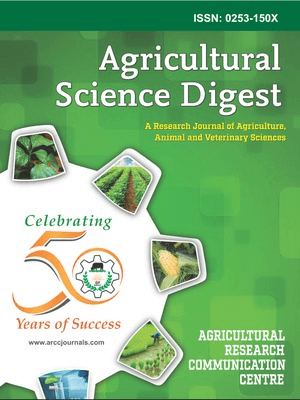
Explore focused research collections and published special issue articles in Agricultural Science Digest. Visit the journal’s Special Issue page for available collections and submission information.
Chief Editor Arvind Kumar
The ARCC publishing experience
Explore ARCC Journals’ Special Issues featuring focused research on timely and emerging topics across agriculture and allied sciences.
Explore ARCC journals and identify the title whose aims and scope best match your manuscript.
Present your work within a clearly defined topic collection to support its intended readership.
Add evidence and perspectives to ongoing research questions in agriculture and allied sciences.
Review the applicable peer-review, ethics, and publication policies before submitting.
For authors
These Special Issues aim to bring together diverse perspectives and innovative solutions to address pressing challenges and opportunities within specific domains, fostering knowledge exchange and scientific discourse for a more sustainable and prosperous future.
Check the active call for papers and the selected journal’s author guidelines for eligible article types, including whether original research articles, review articles, short communications, or case studies are accepted for this collection.
Follow the selected journal’s instructions for manuscript length, references, figures, tables, and supplementary files.
Choose the relevant journal and special issue when submitting. Confirm that your manuscript fits the collection’s scope.
Submit original work, disclose conflicts of interest, and obtain any necessary ethical approvals and permissions.
Submissions are assessed for relevance and scientific quality under the journal’s peer-review policies.
Consult the selected journal’s current charges and confirm any special issue conditions with the editorial office.
For subject experts
Bring your subject expertise to ARCC Journals by proposing a timely Special Issue, curating relevant research, and contributing to scholarly discussions in your field.
Define the scope of a timely Special Issue around emerging questions and priorities in your field.
Apply your subject knowledge to curate a focused collection of relevant scholarly research.
Engage with authors, reviewers, and fellow researchers working in related areas.
Build your academic profile through leadership in a focused scholarly collection.
Help bring together research that deepens understanding of important challenges in your discipline.
Gain experience in scholarly collection development, reviewer coordination, and editorial workflows.
For subject experts
Work with the ARCC editorial team to define a timely, original theme aligned with the journal’s scope.
Help establish the Special Issue scope and research topics to attract relevant, high-quality submissions.
Share the Call for Papers through relevant academic networks, professional communities, and conferences.
Review submissions for relevance to the Special Issue scope and the journal’s requirements.
Help identify suitable reviewers and coordinate the review process in line with journal policies.
Evaluate reviewer feedback and recommend acceptance, revision, or rejection to the responsible editor.
Prepare an introductory editorial that establishes the Special Issue’s context, objectives, and research significance, where required.
Maintain clear, professional communication with authors throughout the Special Issue process.
For subject experts
ARCC Journals supports Guest Editors throughout the Special Issue process with technical assistance, editorial policy guidance, and administrative coordination to help facilitate an efficient workflow.
Receive assistance with the online submission system and Special Issue workflow.
Guidance to align editorial decisions with ARCC journal policies and publishing standards.
Benefit from coordination and administrative assistance throughout the Special Issue process.
Explore open Special Issues across ARCC Journals and submit your research to a relevant collection, or propose a timely research theme to bring scholars together and advance scientific knowledge.